NEW FLAGSHIP
Captain's Legal Shield
Onboard records, emergency response and protective operational documentation in one physical reference.
$48 / $59 hcView on Amazon →
Informational resource · not legal advice. Paperback $48 · Hardcover $59.Rules, protocols and training instruments for decisions made at the helm.
Built around the rule. Designed for the real deck. Every manual, application and checklist is structured for fast use under pressure and precise verification afterward.
Onboard records, emergency response and protective operational documentation in one physical reference.
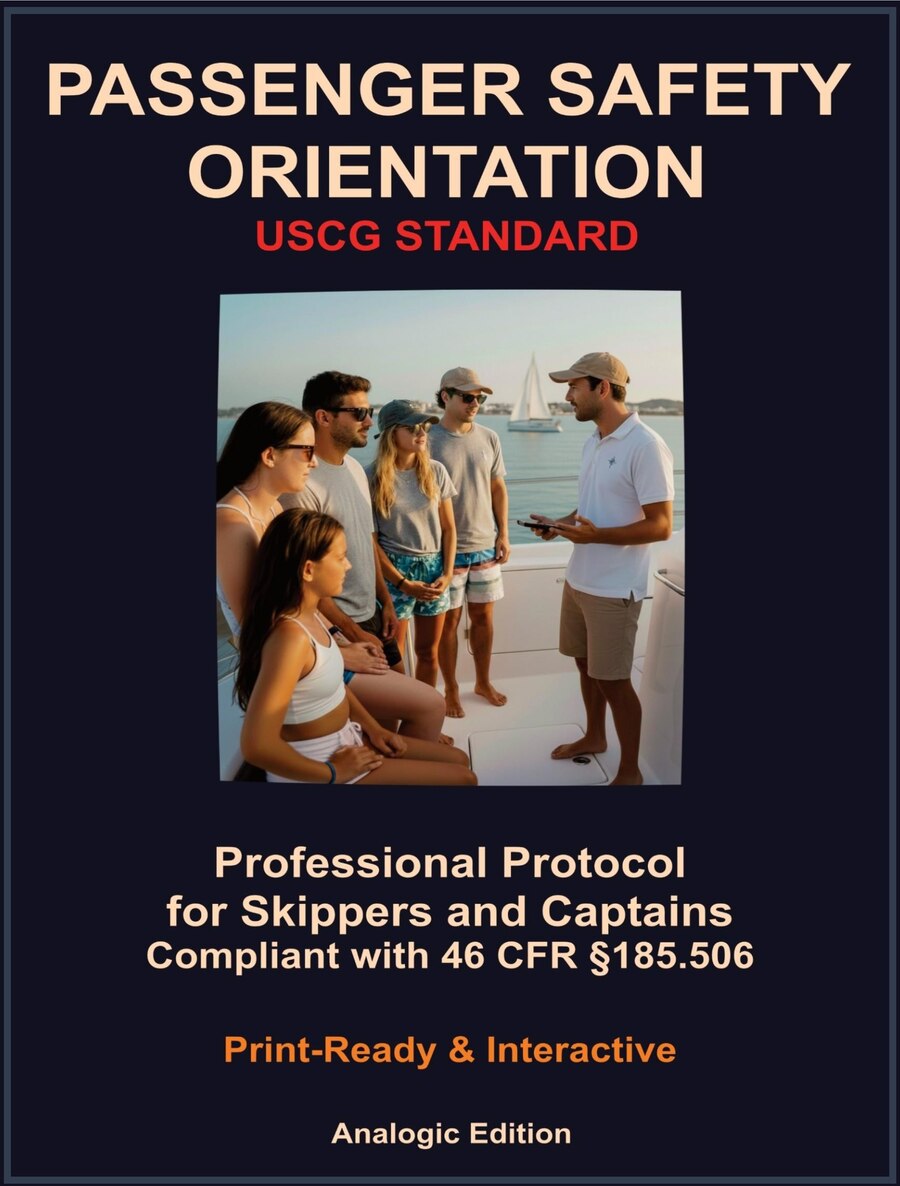
The USCG-ready passenger briefing system for skippers and charter captains.
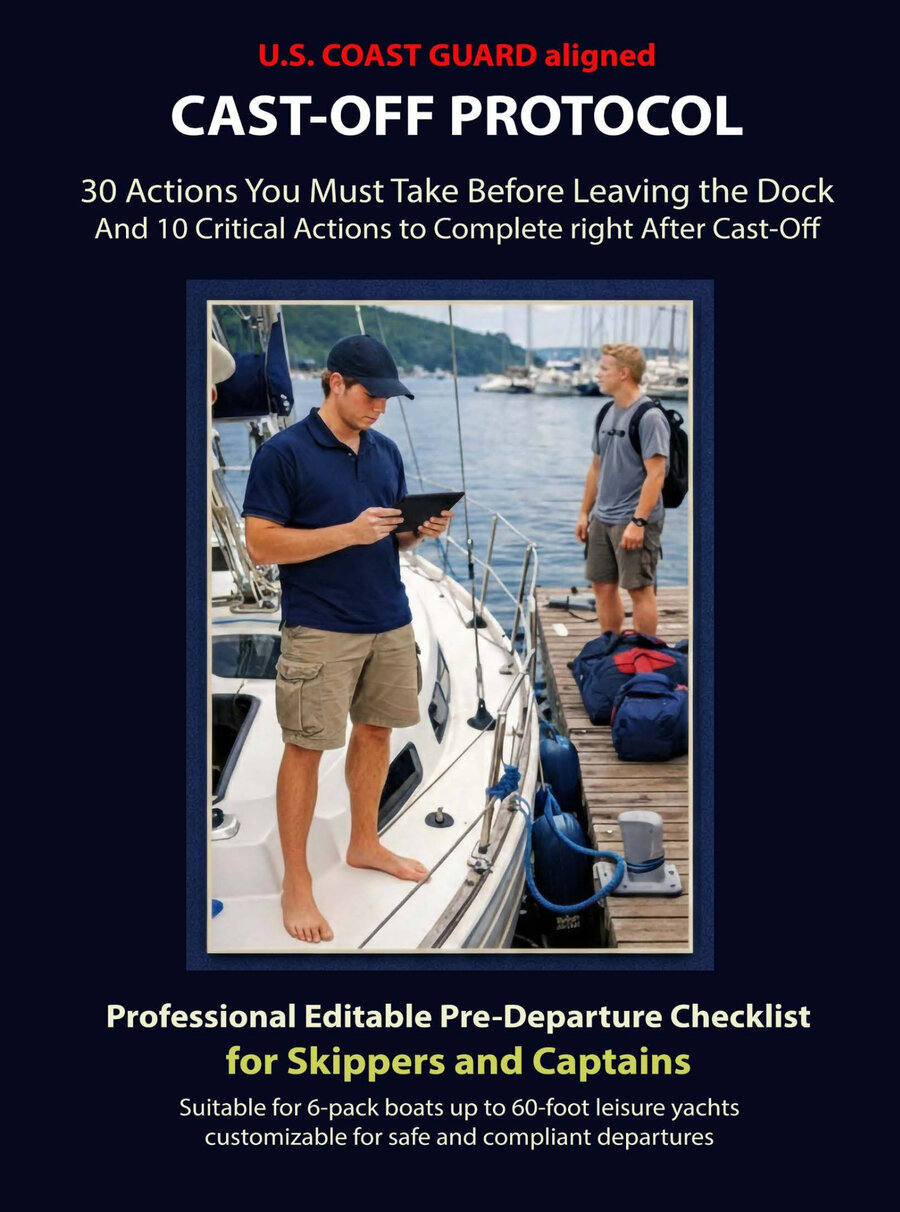
The complete pre-departure system for engine, safety, navigation, crew and documents.
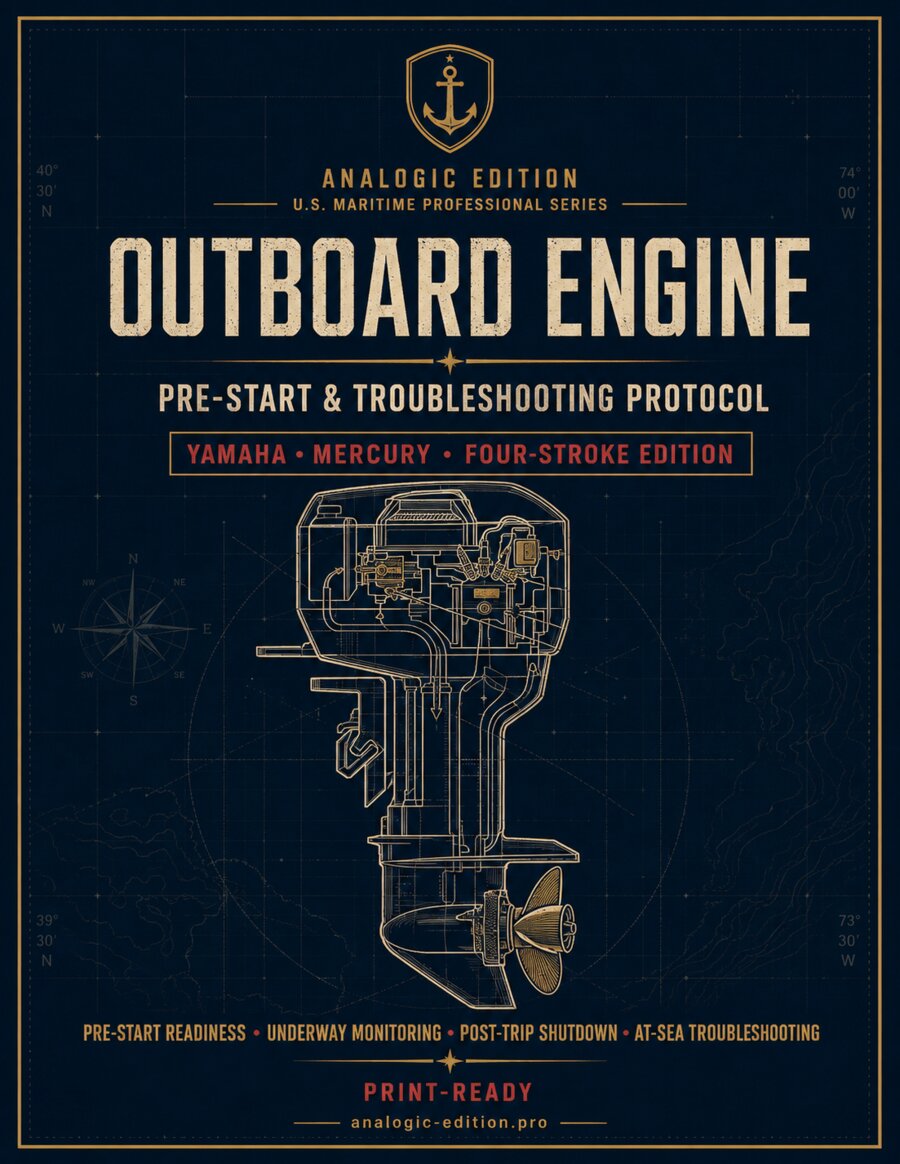
Mercury and Yamaha maintenance, troubleshooting and at-sea diagnostic response.
35 cited checks across lights, day shapes, sound and distress signals — one sheet to keep aboard. Enter your email to open the PDF immediately, plus receive our monthly seamanship brief. No spam, unsubscribe anytime.
Drop a waypoint and the Global Nautical Plotter builds the leg for you — true course, distance to the tenth of a mile, leg time and ETA, recalculated the instant you add a stop or change speed. Feed in your boat's burn rate and it projects fuel and cost for the whole passage, reserve included. Layer live wind, lighthouses, buoys and ports straight onto the chart, save the route as a waypoint logbook you can reopen for the next trip, and run the voyage as a simulation before you ever leave the dock.
For planning and educational use — not a substitute for approved charts or proper navigation practice.
From casting off to docking, anchoring, night watch and emergencies — each topic is a pillar with deep, cited articles underneath.
Read any vessel at night, know your own lights, and never misjudge a crossing in the dark.
Read the guide →Right of way, crossing, overtaking and head-on — who gives way, and why.
Explore →Leave the dock cleanly, single-handed or short-crewed, in wind and current.
Explore →MAYDAY vs PAN-PAN on VHF, EPIRB, man-overboard and the full distress-signal list.
Explore →Med mooring, scope ratios, holding ground and docking against the elements.
Explore →No-nonsense maintenance schedules, troubleshooting and winterizing.
Explore →Most boating content is opinion. Ours is anchored to the regulation — COLREG, the US Inland Navigation Rules, 33 CFR — so you are never guessing whether what you read holds up. We write for the helm, not the exam hall, and we say plainly when good seamanship overrides the book. That is Rule 2, and it always wins.